
Grief is not just emotional.
It lives in the nervous system.
After a deep loss, many people notice they can’t focus, have lost motivation, and sleep patterns are erratic (either too much or too little). Often times we hear that they hardly recognize themselves anymore.
People may view their grief responses as a weakness – but it is not. It’s their brain responding to trauma and change.
I started reading The DOSE Effect by TJ Power about 3 weeks ago because I was looking for a way to improve my emotional regulation. After a few years of chronic pain and the sense of loss I had felt over those years, I have chosen to be committed to working through my emotional dysregulation. While not written specifically for grief, this book offers simple, accessible actions that support the nervous system in ways grieving people truly need.
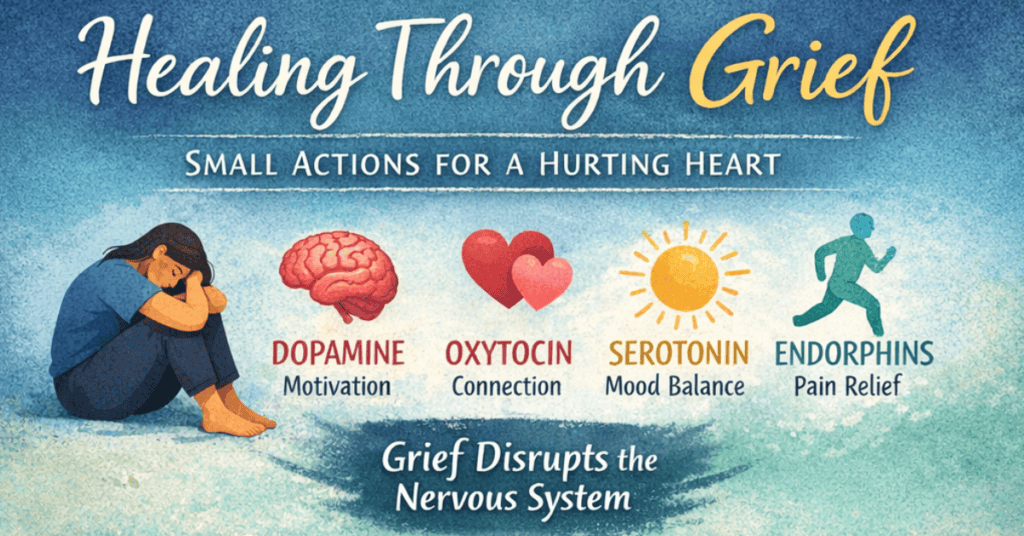
The DOSE framework focuses on four key neurochemicals:
- Dopamine – motivation and forward movement
- Oxytocin – connection and emotional safety
- Serotonin – mood stability and self-worth
- Endorphins – relief from emotional and physical pain
Grief arising from any significant loss can disrupt all four of these neurochemicals.
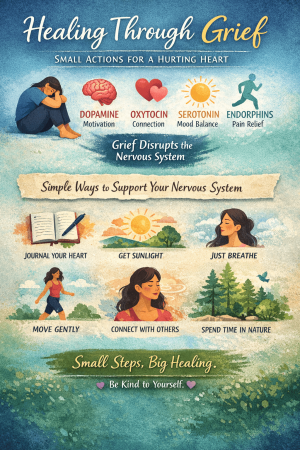
What I have found so helpful is that the practices suggested are small.
- Journaling instead of scrolling
- Gentle movement and sunlight
- Conscious breathing
- Meaningful connection
- Time in nature
These are not “self-help clichés.” They are biological supports for a nervous system under stress.
In grief work, we don’t ask people to push through pain or “think positive.” We help them create safety in the body first. When the nervous system is supported, clarity, meaning and a renewed sense of purpose can slowly return.
Healing doesn’t come from doing more.
It comes from doing what’s kind, consistent and regulating.
If you’re grieving or supporting someone who is, remember this:
Small steps matter.
Your nervous system matters.
And healing is possible, even when life will never look the same.