
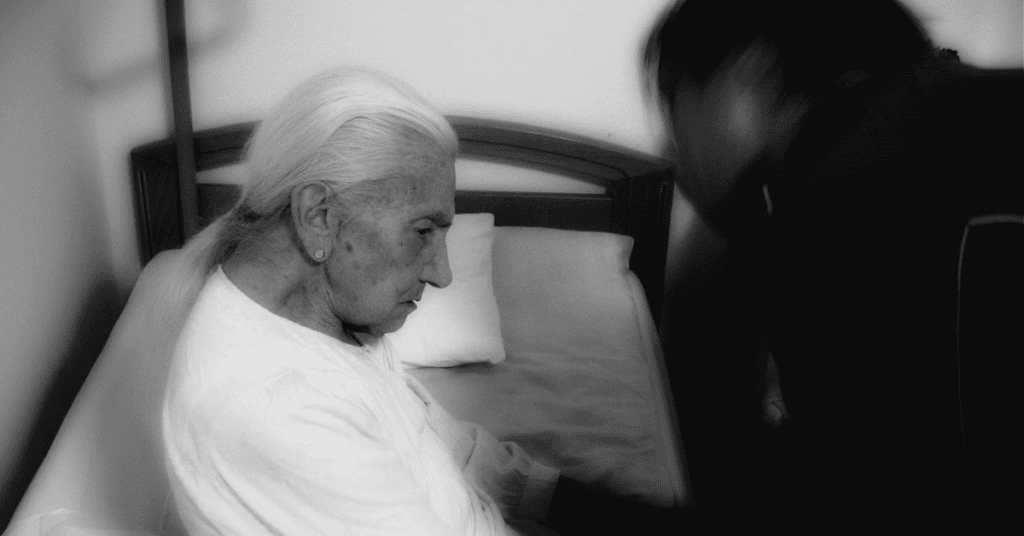
There is a kind of grief that begins long before death.
It can begin when your mother asks you the same question for the fifth time.
When your husband gets lost driving a route he has traveled for decades.
When your father looks at you for just a moment too long before remembering your name.
When the person who once managed the finances, planned the holidays, told the family stories or knew exactly how you liked your coffee suddenly needs help doing the simplest things.
Alzheimer’s disease introduces families to a particularly complicated form of grief because the person we love is still physically present while pieces of the relationship we once knew begin to change.
During World Alzheimer’s Month, I believe we need to talk not only about memory loss and dementia care, but also about grief.
The grief of the person whose brain is changing.
The grief of the spouse, child, sibling or friend watching those changes happen.
And the profound physical, emotional and neurological toll that can accompany loving and caring for someone through a progressive disease.
The Long Goodbye Is Not One Loss
We sometimes hear Alzheimer’s described as “the long goodbye.”
I understand the phrase. But I also wonder whether it makes something incredibly complex sound too simple.
There isn’t one goodbye.
There may be hundreds of them…
The first time they cannot remember something important.
The day the car keys need to be taken away.
The first time someone else must manage the medications.
The moment cooking alone is no longer safe.
The first missed birthday.
The first time assistance is needed with dressing or bathing.
The first time your loved one looks directly at you but does not recognize who you are.
Each change can carry its own loss.
And because the disease progresses differently for every person, families often do not know when the next change will come.
That uncertainty matters.
Psychologist and family therapist Dr. Pauline Boss, professor emeritus at the University of Minnesota, pioneered the concept of ambiguous loss—a loss that lacks the clarity and finality we normally associate with death.
Dementia is perhaps one of its clearest examples: someone may be physically present while becoming psychologically or cognitively less available in ways that change relationships profoundly. Boss devoted an entire book to this experience, Loving Someone Who Has Dementia: How to Find Hope While Coping with Stress and Grief.
There is no funeral when a spouse forgets your anniversary.
There is no sympathy card when your mother can no longer remember the childhood stories you shared.
There is no formal ritual when a partner gradually shifts from being your companion to someone who depends upon you for nearly every aspect of daily life.
Yet grief is happening.
Anticipatory Grief: Mourning What Is Changing and What May Come
Researchers often describe this experience as anticipatory grief, pre-death grief, or dementia-related grief.
A recent review of research on caregivers of people living with Alzheimer’s disease and related dementias describes anticipatory grief as the emotional response to cumulative, ongoing losses associated with cognitive decline and changes in the relationship between caregiver and loved one.
That distinction is important.
The caregiver is not simply anticipating the eventual death of someone they love.
They may already be grieving:
- their former relationship
- their shared independence
- their future plans
- their social life
- their freedom
- their role as spouse or child rather than caregiver
and sometimes even the experience of being known by the person who has known them most deeply.
This grief can coexist with tremendous love.
It can also coexist with frustration, resentment, exhaustion, guilt, sadness and even moments of wishing the caregiving would end.
Those emotions are not mutually exclusive.
A person can deeply love their spouse and desperately want one uninterrupted night of sleep.
A daughter can adore her mother while grieving that their conversations will never again be what they once were.
A caregiver can treasure moments of connection while simultaneously feeling overwhelmed by what the disease has asked of them.
That is the ambiguity of this grief.
The Caregiver’s Body Is Carrying the Story Too
One of the most important things we can do for caregivers is to stop treating their exhaustion as though it is simply the consequence of “having a lot to do.”
Caregiving is work.
But dementia caregiving may also require the brain and nervous system to remain in an almost continuous state of adaptation:
- What mood will my loved one be in today?
- Will they wander tonight?
- Did they take their medication?
- Is the stove turned off?
- Can I safely leave the house?
- Will they recognize me?
- What happens if I become sick?
- How long can I keep doing this?
The body responds to prolonged uncertainty.
Researchers studying dementia caregivers have found evidence of changes associated with chronic stress, including disruptions in sleep, differences in cortisol and immune functioning, and difficulties with attention and executive functioning. One systematic review found that caregivers often had elevated cortisol and performed more poorly on tests involving attention and executive function. Other research has identified effects involving sleep, inflammatory and immune markers, cardiovascular risk factors and cellular aging, although findings vary across studies and individuals.
In other words, caregiving stress is not merely “in your head.”
The body most likely is carrying the caregiving experience too.
Chronic vigilance takes energy.
Interrupted sleep takes energy.
Making dozens of additional decisions every day takes energy.
Watching someone you love change while simultaneously trying to keep them safe takes energy.
And the caregiver’s brain is constantly learning a new version of normal, only to discover that normal may change again.
The Numbers Tell Only Part of the Story
The scale of dementia caregiving in the United States is staggering.
According to the Alzheimer’s Association’s 2026 Alzheimer’s Disease Facts and Figures, nearly 13 million Americans provide unpaid care for people living with Alzheimer’s disease or another dementia.
During 2025 alone, those caregivers provided an estimated 19.6 billion hours of unpaid care, valued at more than $446 billion.
That averages nearly 30 hours of care every week per caregiver.
And 59% of dementia caregivers report high to very high levels of emotional stress.
But numbers cannot tell us what 3:00 a.m. looks like in a home where someone is wandering.
They cannot measure the grief of changing your spouse’s clothes.
They cannot capture the daughter sitting in her car after a medical appointment because she needs five minutes to cry before going back to work.
They cannot quantify the loneliness of having the person you once turned to for comfort become the person you are now responsible for comforting.
Statistics tell us the size of the caregiving population.
Stories help us understand the weight they carry.
And What About the Person Living with Alzheimer’s?
There is another side of this grief conversation that deserves equal attention.
The person living with dementia may be grieving too.
We sometimes speak about Alzheimer’s almost entirely from the perspective of what families are losing.
But particularly during earlier and middle stages of dementia, many people are acutely aware that something is changing:
- They may recognize words becoming harder to retrieve
- They may notice other people finishing their sentences
- They may experience the humiliation of losing the ability to drive
- They may become aware that financial decisions are being handed to someone else
- They may watch family members quietly exchange concerned looks
- They may understand that their independence is narrowing
And they may fear what comes next.
A review examining grief among people living with dementia identified five recurring dimensions: grieving the person they used to be, grieving how others now perceive them, grieving who they may become, grieving previous losses and deaths, and identifying what helps them live with those losses.
Imagine knowing that your mind is changing while simultaneously fearing that others will begin talking around you rather than to you.
There is grief in that too.
This is why preserving dignity matters so deeply.
A diagnosis should never erase personhood.
Even when memory changes, emotional connection may remain.
A familiar song may still bring comfort.
A gently held hand may still communicate safety.
A favorite food may still bring pleasure.
Laughter can still happen.
Love can still be experienced in the present moment, even when yesterday has become difficult to retrieve.
Perhaps We Need a Different Definition of Hope
When we talk about grief, people often feel pressure to “stay positive.”
When we talk about Alzheimer’s, families sometimes hear encouragement to treasure every moment.
Of course there can be beautiful moments.
But telling an exhausted caregiver to treasure every moment can become another burden.
Some moments are frightening, frustrating, deeply sad or tinged with anger.
Many caregivers are simply trying to make it through the day.
Hope does not require pretending those realities do not exist.
Pauline Boss’s work on ambiguous loss offers an important perspective: when circumstances cannot necessarily be resolved, the goal may not be “closure.” Instead, families can learn to hold both grief and hope, absence and presence, love and frustration, what has been lost and what remains.
Perhaps hope in Alzheimer’s disease sometimes looks smaller than we expect:
Hope may be…
- A peaceful afternoon
- A familiar smile
- A song remembered
- A caregiver accepting help
- A conversation in which someone finally says, “This is really hard.”
- A family deciding that respite care is not abandonment
- A spouse realizing they are still allowed to have a life
- A daughter understanding that loving her mother does not require destroying her own health in the process
Caring for the Caregiver Is Part of Caring for the Person With Dementia
We must stop treating caregiver support as optional.
It is a part of dementia care.
If prolonged caregiving can affect sleep, cognition, emotional health and physical health, then respite, community, education, emotional support and opportunities to process grief are not luxuries.
They are protective resources.
Sometimes the most compassionate question we can ask a caregiver isn’t:
“How is your loved one doing?” Instead, it is: “How are YOU doing while loving someone through this?”
And then we need to be willing to listen and hear the real answer.
Not fix it.
Not immediately offer advice.
Not tell them how strong they are.
Not remind them that someday they will miss these moments.
Simply witness what they are carrying. Because grief does not wait for death.
Sometimes grief lives at the kitchen table while two people are still sitting there together.
Sometimes it lives in the space between remembering and forgetting.
Sometimes it appears when a familiar face becomes unfamiliar.
And oftentimes it exists alongside extraordinary love.